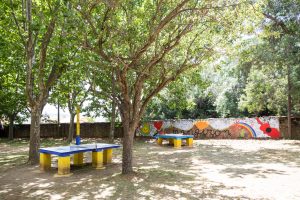
Throughout the whole period of compulsory formal education, the main objective is to instil and convey a set of values and learning that are necessary for the proper development of children. The aim is, above all, to encourage the acquisition of knowledge and skills that will be key to their future growth as individuals. That is why it is so important for this stage of education to convey the appropriate learning in a holistic way, cutting across all disciplines. In this way, classroom lessons are just as important as extracurricular activities. By these we can understand both excursions and group trips, which without doubt include school trips. School trips are, in essence, a way of complementing, reinforcing and extending what has been learnt in the classroom.
It is therefore very important to bear in mind that every school trip must have a cultural component. Not merely as a way of balancing a more varied itinerary, but as an essential part of the school trip experience that participants must live. Cultural school trips need not rule out other types of activities. Keeping in mind what is at the centre of their itinerary, the organisation of these trips can take advantage of this to create a well-balanced programme that generates very powerful learning. Cultural school trips also offer numerous options in terms of activities and dynamics. With this focus, participants have fun, enjoy themselves, discover new places — all from a cultural perspective that often goes unnoticed by them. Thus, the cultural becomes a driver of enjoyment and something motivating.
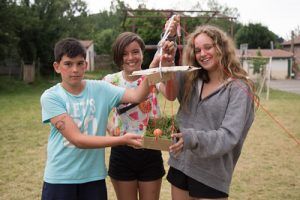
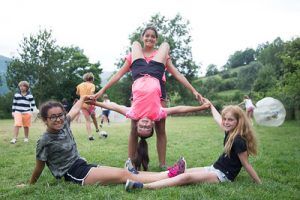
Cultural school trips are one of the many options available when organising a school trip. They also have the advantage of being suitable for multiple destinations. To discover the options available for this and other types of trip, you can visit our website Natuaventura Ocio y Tiempo Libre.
Cultural school trips: a world of connection
Cultural school trips are an unrivalled way of connecting and reinforcing learning. It is not the same to give a classroom lesson on natural science or biology, in which the workings of an ecosystem are analysed, as it is to walk through and observe that very same ecosystem in the heart of nature. Or to review the history of a country or a region from a desk, as opposed to discovering that same place in person, first-hand. It is around this idea that cultural school trips are built. The concept is to extend the knowledge developed in the classroom in a vivid and dynamic way. A cultural trip allows themes and sessions to be continued and learning and dynamics to be conveyed, but always from an experience-based perspective. What a child lives through first-hand undoubtedly leaves a deeper impression than what is conveyed to them from the outside.
In this way, the present moment of learning is connected with the past of its origins and with the future both of what lies ahead and of what remains to be discovered by the group. Participants in cultural school trips have a broader network within which to fit their learning. The integration of what has been learnt is greater and is associated with memories they will never lose. Furthermore, a shift is achieved in the participant’s perspective on tourism. Until then, it is often associated with only one type of destination or with the sole aim of having fun, which encompasses both rest and leisure. Cultural school trips succeed in broadening that definition, bringing into it visits to museums, tourist tours and urban trails.
Cultural school trips: a wealth of options
This is precisely one of the great advantages of cultural school trips — they put an enormous number of options at the disposal of the travelling group for building their itinerary. We often have the idea that cultural activities are limited to spaces where culture is exhibited; that is, museums or exhibitions. However, this is a mistaken notion, and cultural school trips set about dismantling it. While visiting museums and exhibitions is one of the activities we can carry out on this type of school trip, it is by no means the only one. Culture allows numerous other activities and dynamics to be themed around it. It need not be limited to covering a particular space within a city or a region.
Moreover, simply exploring an area of tourist interest provides a cultural learning experience of great value. This wealth of options allows the creation of a dynamic and varied itinerary. The transmission of culture leads to young people who are better prepared, more open-minded and more aware of the place they occupy in the world. It drives the desire to learn and to develop in this world full of information, where knowledge is a way of staying current, connected and up to date. Cultural school trips give pupils the capacity to connect ideas and develop complex thinking that integrates what has been learnt with what has been lived. It is, without doubt, an outstanding way to bring an academic year to a close.
Cultural and urban school trips
You can find all the information about our cultural and urban school trips in the following posts: