
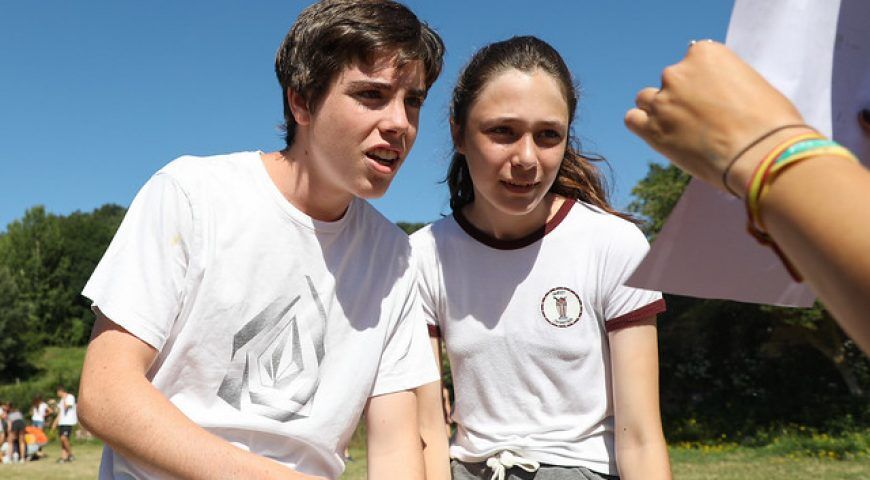
Packing for camp is one of those moments families remember year after year. This article is the starting guide: what you cannot leave out, what you never actually need, the basic decisions (rucksack or suitcase, sleeping bag or not, warm clothing even in July). The full official packing list always goes in the PDF we send before camp; here we explain the reasons behind it.
Rucksack or suitcase: the first decision
At a summer camp we always recommend a rucksack or holdall over a wheeled suitcase. The facilities (paths, gardens, cabins, tents) are not designed for wheels, and the participant feels more independent carrying their own luggage. A rucksack of around 30 litres is usually enough for a fortnight.
What you cannot leave out
Warm clothing
Sweatshirts, long trousers and a fleece or waterproof jacket, even in July. In the mountains (Gredos, Sierra de Madrid) and in Cantabria the nights always turn cool, and rain can appear on any excursion.
Sleeping bag
Essential for camps in tents (Gredos, Navarredonda, Navatormes) and useful even in a hostel for bivouac nights. No need for a technical one: a bag rated for comfort around 5°C is enough.
Two sets: towel, swimsuit, footwear
One towel for the shower and one for the pool or beach, two swimsuits so they can alternate drying, and a spare pair of trainers in case the first pair gets wet or falls apart.
Forgotten essentials
Cap, sun cream, flip-flops (also for the shower), water bottle, torch, small daypack for excursions. Details that make all the difference.
How to pack WITH your child
Pack together, not for them: let the participant see what is inside and where everything is. Avoids the «I can’t find anything» moment on the first day.
Label all clothing: first name and surname on every item, including footwear. In fortnights with 40-50 participants, unlabelled clothing is what gets lost.
Comfortable clothing, not new: better to bring clothes they already move around in freely than new items. They will be spending a great deal of time outdoors, in workshop painting sessions and on grassy afternoon activities.
Pocket money: 20-30 € for the fortnight, enough for excursions and the odd purchase.
The full official list
The detailed packing list, with exact quantities per item and the specific requirements of each camp (tent vs hostel, Cantabrian coast vs inland), is included in the official information sheet in PDF format that we send to enrolled families. That list is the definitive reference for preparing your luggage.
What stays at home
No need to bring
- Expensive or brand-new clothing
- Tablet, portable games console, laptop
- Jewellery or valuables
- Large amounts of cash (20-30 € is enough)
About mobile phones
- Can be brought but are collected on arrival
- Returned every 3-4 days for calls home
- For peace of mind: arrival SMS confirmation and a daily diary on social media
Frequently asked questions
What size rucksack do they need?
For a fortnight, a 30-litre rucksack is usually enough. For a ten-day camp, smaller still. The important thing is that the participant can carry it unaided.
Is a sleeping bag needed if they are staying in a hostel?
Yes. Even though beds are provided, many camps include at least one bivouac night (sleeping outdoors or a special overnight activity) and the sleeping bag is also useful on long hikes.
What if it rains?
Always pack a lightweight waterproof jacket or cagoule. In the mountains and Cantabria a rainy day is always possible. Activities continue regardless, so it is better to come prepared.
How much pocket money should they bring?
We recommend 20-30 € per participant for a fortnight. The organisation holds the money and hands it out at set moments (excursions, village market stalls).
Is labelling clothing really that important?
Very much so. With 40-50 participants per group, unlabelled clothing is the first to end up in the lost-property box at the end of camp. A first name and surname on every item prevents most losses.
Is your child going for the first time?
Browse available camps, dates and the information sheet with the official packing list.
We organise trips for primary, secondary and high school
School Trips
across Spain
alicante madrid barcelona more destinationsCamps from 6 to 17 years old, in different regions of Spain: Alicante, Madrid, Ávila, Cantabria and Cuenca.
summer camps
2026
multiadventure surf english immersion