
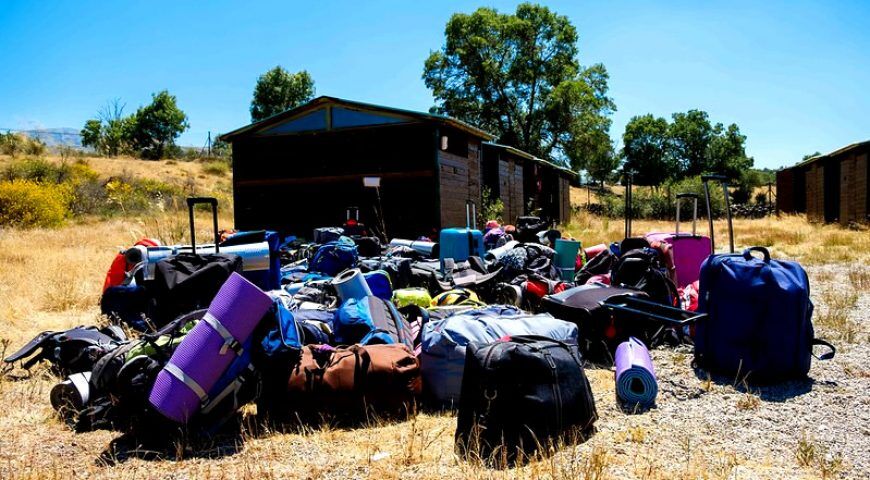
Packing for a summer camp is the first joint task between parents and child: how it is packed will affect how comfortable the child is throughout the entire session. In this article we focus on the preparation: weight, organisation, distribution and labelling. The full list of what to bring is integrated at the end.
Three principles for packing the bag
Do it with your child
This is the most important recommendation. If the child takes part, they will know what they have packed, where each item is and will be able to use it without having to ask the activity leader to find a sock.
Small, easy to carry, no wheels
A medium-sized soft-sided rucksack or bag — no wheels. The journey they will make with it is from the coach to the room, so they must be able to carry it on their own.
Label everything
Label the outside of the bag with their name and the camp. Every item of clothing and every article, labelled on the inside. This avoids mix-ups that in a room of 8 children are unavoidable without labelling.
Steps for a well-packed bag
List in hand: print or note down the official camp list (see below) and go through it point by point before putting anything in.
Try the empty bag: have your child put it on. If it is too big for them, it is worth swapping. If it is heavy empty, that too.
Fold by outfit: group items by use (daywear, pyjamas, swimwear) in fabric or plastic bags so they can find each thing quickly.
Distribute the weight: heaviest items at the bottom and closest to the back. Footwear in a separate bag. Toiletries in an independent and easily accessible wash bag.
Small separate day bag: a small rucksack (around 35 litres) for excursions and day trips. It does not need to be new: one they already know will be more comfortable.
Final check with the child: have them open it, go through it and, if they are up for it, mentally run through each section. That check is what prevents the «I can’t find my water bottle» moment.
Weight and volume: two common mistakes
Overpacking
- Too many clothes «just in case»
- Full-sized toiletries from home
- Too many pairs of shoes
- Heavy books instead of just one
How to lighten the load
- Stick to the official list: the quantities are designed for the session
- Shampoo, shower gel and toothpaste in travel sizes
- One pair of trainers + flip-flops + (if applicable) walking boots
- One book or notebook, not a library
Suggested list for 13–15 days
- 8 short-sleeved T-shirts (one plain white for the creative workshop).
- 3 long-sleeved sweatshirts.
- 3 pairs of shorts.
- 8 sets of underwear and 8 pairs of socks.
- 1 pair of trainers and, depending on the camp, 1 pair of walking boots.
- 2 swimsuits and 1 pair of flip-flops for the pool.
- 1 pair of pyjamas.
- 2 bath towels (one for the shower, one for the pool).
- Wash bag: shampoo, shower gel, toothpaste and toothbrush, comb, high-factor sun cream, moisturiser, lip balm.
- Sleeping bag if the camp requires it (camping or bivouac).
- Insect repellent (optional).
- Cap or sun hat.
- Water bottle or reusable flask.
Equipment provided by the organisation
At camps with a surf course (Santander Surf), the board and wetsuit are provided by the surf school. At language immersion camps (Sierra Madrid English Camp, Navatormes), learning materials are included. Families are responsible for clothing, toiletries and the personal bag.
Frequently asked questions
Rigid suitcase with wheels or a rucksack?
A rucksack or soft-sided bag without wheels is better. The practical reason: cabins, tipis and hostel rooms often have access points where a rigid wheeled suitcase is awkward.
Mobile phone — yes or no?
Yes, but it is collected on arrival. It is returned for calls home every 3–4 days. Bring a charger and, if the phone has a case, label it with the child’s name.
How much pocket money do they take?
Between €20 and €30 is recommended. The activity leaders manage it and the child uses it for excursions, the tuck shop or small purchases during the session.
And medication?
It is handed over to the organisation at the start, along with a prescription and dosage instructions. Activity leaders manage it according to the family’s instructions. Remember to flag this at enrolment.
What if they forget something important?
Activity leaders help sort out the basics (an extra towel, an emergency wash kit). Even so, a good final check before departure avoids hassle and messages of «I haven’t brought such-and-such».
Bag packed, camp ready
Check the specific details of each Natuaventura camp to tailor the list to your session.
We organise trips for primary, secondary and high school
School Trips
across Spain
alicante madrid barcelona more destinationsCamps from 6 to 17 years old, in different regions of Spain: Alicante, Madrid, Ávila, Cantabria and Cuenca.
summer camps
2026
multiadventure surf english immersion