
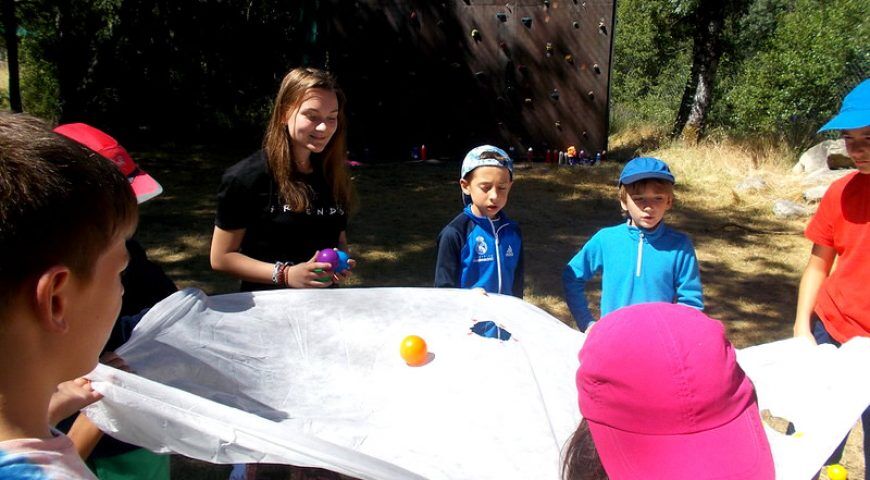
A summer camp is, above all, an accelerated school of human values. In a fortnight, a child lives alongside strangers, shares a room, manages conflicts, learns to wait their turn and to look out for others. This is what happens, beneath the surface of the activities, at a Natuaventura camp.
The values that camp genuinely trains
Teamwork
The group of 40–50 campers with 1 activity leader per 8 makes collaboration essential: nobody completes the live Cluedo alone, nobody stages the evening entertainment alone, nobody climbs the wall alone.
Respect
Sharing a room or tent, waiting for your turn in the shower, listening to a fellow camper who does not quite fit in at first. Respect is practised, not taught on a whiteboard.
Autonomy
Packing their bag in the morning, managing their pocket money (€20–30), dealing with tiredness. Without mum or dad nearby. This is genuine independence — the kind that cannot be rehearsed at home.
Responsibility
Mobile phones are collected on arrival and returned every 3–4 days for calls home. Learning to be without a screen and to trust that parents are fine too is pure emotional education.
How these values are worked into the daily routine
Morning — technical activity: climbing, archery, orienteering. This is where patience, perseverance and frustration management are trained.
Midday — meals and rest: four meals a day with in-house catering. The dining room is the first space for community life: turn-taking, conversation, mutual help.
Afternoon — large cooperative game: Humor Amarillo, treasure hunts, capture the flag. Teams are assigned, not chosen: learning to play with anyone is the true exercise in respect.
Evening — entertainment and rest: plays, songs, expressive workshops. Speaking in front of the whole group, putting yourself out there and laughing at yourself is the best lesson in healthy self-esteem.
The difference between values and environmental education
Environmental education teaches us to care for our surroundings. Education in values teaches us to care for people. Both coexist at camp — but this is the human dimension, not the ecological one.
What families say
Families tend to notice the change in small things on the child’s return: they clear the table without being asked, they ring «just to find out how you are», they ask about their camp friends throughout the school year. These are not anecdotes: they are the first signs of a change that has taken place.
Frequently asked questions
How are values addressed with such large groups?
The ratio of 1 activity leader per 8 participants and age-based groups allow for close support. Activity leaders are specifically trained to spot small conflicts before they escalate and to provide emotional support to those who need it.
What if my child is shy or finds it hard to integrate?
This is the most common experience in the first few days. The camp routine, with many cooperative activities, means integration comes about almost on its own between days 2 and 4. Activity leaders actively support that settling-in process.
What is the activity leader-to-participant ratio?
1 activity leader per 8 participants, in groups of a maximum of 40–50 campers organised by age.
How do phone calls and mobile phones work?
Mobile phones are permitted but collected on arrival and returned for calls home every 3–4 days. The team also publishes a daily social media diary so families can follow the day-to-day.
How many meals are provided and what is the catering like?
Four meals a day (breakfast, lunch, afternoon snack and dinner), with in-house catering, home-cooked food and menus adapted for allergies and intolerances.
Find the camp you are looking for
Check destinations, dates and prices for the current edition of Natuaventura camps.
We organise trips for primary, secondary and high school
School Trips
across Spain
alicante madrid barcelona more destinationsCamps from 6 to 17 years old, in different regions of Spain: Alicante, Madrid, Ávila, Cantabria and Cuenca.
summer camps
2026
multiadventure surf english immersion