
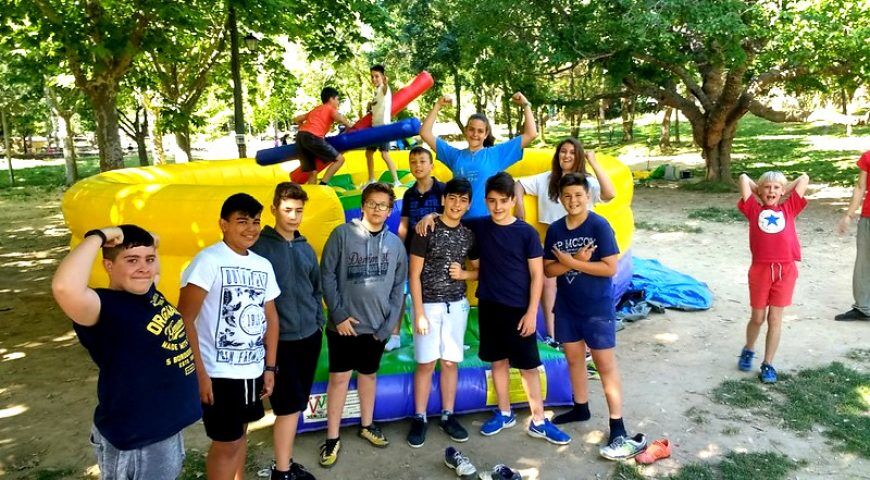
Summer is on its way, which means summer camps are too. The rise of summer camps in recent decades is no coincidence: they make a great contribution to children’s development and allow them to get to know themselves while having fun. Here are the 6 reasons why it is worth signing your child up for a summer camp.
1. It teaches them to be independent
One of the main reasons to send your child to a summer camp is that it allows them to develop independence. When they step out of the family environment, children and young people begin to acquire greater autonomy. Even though they have the support of professional activity leaders, they must do things for themselves that parents would normally do for them at home: clearing the table, packing their bag, tidying their clothes. These actions, however small they may seem, greatly support children’s personal development and their independence.
2. Community living
One of the main things children will learn at camp is how to live alongside others. They will share their days with boys and girls of different ages and different tastes. To support this, camps establish a set of community rules from the very first day and show the importance of learning to relate positively to others.
3. Values
Values are the fundamental basis of summer camps and their activities constantly focus on teaching important life values. Group activities and workshops are designed so that children learn to collaborate with one another, fostering respect for others. The underlying approach starts from civic responsibility, showing that one’s own actions can affect fellow campers. Equality — both in terms of gender and race — respect for nature, healthy habits and responsibility are the foundation and framework that govern the programme.
4. Learning
Learning is another reason to send your child to a summer camp. From the very start, the child will be in a completely new environment, full of activities and experiences they will discover throughout their stay. Through games, activities and workshops, participants will acquire new skills to develop their natural abilities or learn new ones.
5. Making new friends
Children and young people will meet many new people at summer camps and will certainly have the opportunity to form strong friendships with their fellow campers. Together they will share unique moments: swimming in a river, talking late into the night with their best friend, watching a sunset.
6. Enjoying nature
Finally, participants will have direct contact with natural environments and learn to care for them. Outdoor activities are very varied: walking through the countryside, swimming in natural settings, exploring the farm. As these activities unfold, the importance of caring about the environment is fostered and participants are given the tools to look after it.
How these reasons are reflected in the Natuaventura catalogue
Independence and community living
Single-gender rooms, a ratio of 1 activity leader per 8 participants and a daily routine that builds everyday independence across all camps.
Values and learning
Workshops, treasure hunts and cooperative games integrated into the programme, with activity leaders trained in camp pedagogy.
Nature and friendships
Sierra Norte de Madrid, Sierra de Gredos, Río Tormes, Casillas de Ranera, Font Roja, the Cantabrian coast: environments for living the summer outside the classroom.
Frequently asked questions
From what age can I sign them up?
From 6 years old at Madrid Multi-adventure, Sierra Madrid English Camp and Cuenca; from 7 years old at Gredos, Navarredonda, Navatormes, Daroca and Santander Surf Fortnight; from 13 years old at Santander Surf 10 Days.
How do I find out how they are getting on?
A daily social media diary with photos, phone calls home every 3–4 days and an SMS confirming arrival at the camp.
How much pocket money do they need?
We recommend €20–30 in pocket money, managed by the activity leaders. Mobile phones are permitted but collected on arrival.
Will they find it hard to settle in?
The vast majority of children settle in within the first 24–48 hours. The first day’s routine is designed so that bedtime arrives after many hours of shared play.
Which is the best month?
July concentrates practically all of Natuaventura’s offering. The first fortnight is the most in demand, so it is worth booking between February and April.
Find the ideal camp for your child
Multi-adventure, English, surf: discover all the formats in the Natuaventura catalogue.
We organise trips for primary, secondary and high school
School Trips
across Spain
alicante madrid barcelona more destinationsCamps from 6 to 17 years old, in different regions of Spain: Alicante, Madrid, Ávila, Cantabria and Cuenca.
summer camps
2026
multiadventure surf english immersion