
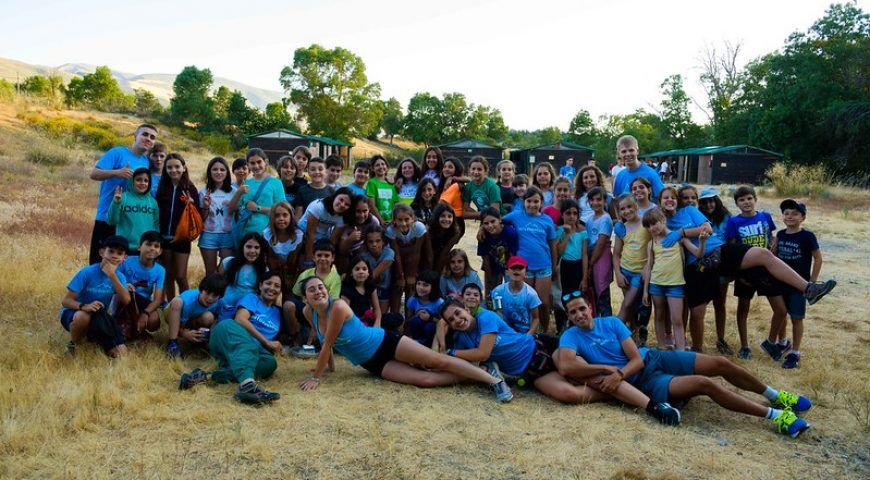
A child’s first summer camp is an important step in their development — and for the family too. There are nerves on both sides, reasonable doubts and a change that is noticeable on the way home. In this article we run through the 7 reasons that justify that first time and the most common questions from parents facing their child’s first camp experience.
What a first summer camp brings
The learning model at a camp differs greatly from the education delivered during the school year. Summer camps gave birth to education through free time, in a fun way. Understanding that the aim is to complement classroom learning, and that children will thoroughly enjoy it, eases the worry and anxiety that comes with sending them for the first time.
7 reasons to go to a first summer camp
- Their self-confidence and self-esteem will grow.
- Living alongside others: they will have the chance to interact with other participants, learning respect and tolerance, and to live as part of a community.
- Respect for the environment: summer camps place special emphasis on this value. By attending, children learn it as a fundamental part of their upbringing.
- Skills and abilities: at their first camp they can develop new skills. If you choose a camp with a specific theme — languages, sports, arts — they can begin to specialise in one of them.
- Games, workshops and rules: they will learn new games, take part in workshops and follow shared rules with their fellow campers.
- Maturity: a first camp will be a completely new experience that allows them to grow and mature as a person. Following rules, taking part in activities and living alongside others will teach them the importance of acting within established boundaries.
- Learning to achieve goals: goals are set in camps from the very first day. From a young age, attending camp teaches children to strive towards their objectives and not give up easily.
How to prepare for the first time
Talk calmly: tell them what is going to happen, where they are going and how many days they will be away. Knowing what to expect reduces nerves.
Pack the bag together: let them take part in choosing what to bring and see what they are packing. It avoids the «I can’t find it» moment in the middle of camp.
Agree on a brief goodbye: at the departure point, a prolonged farewell complicates things. Better a hug, a smile and getting on the coach.
Trust the team: a ratio of 1 activity leader per 8 participants, phone calls home every 3–4 days, a daily social media diary with photos and an SMS confirming arrival. The organisation keeps families informed.
The emotional side: what really happens
The first few hours
The coach, new companions, arriving. Lots of stimulation, a little nervousness, a great deal of curiosity. The first day’s routine is designed to make that transition smooth.
The first night
The most sensitive moment. Activity leaders are on hand, rooms group children of similar ages together, and the healthy tiredness of the day does most of the work.
Days 2–3
The settling-in period is done. The routine feels familiar, there are already friends, there is already a favourite activity. This is when the family receives the first «they are absolutely fine» during the phone call.
Coming home
A tired child, asleep on the coach, with a mountain of stories to tell. The first nights at home can carry an emotional echo: this is normal and lasts a few days.
Frequently asked questions from first-time parents
What if they cry?
This is normal in the first few days, especially at bedtime. Activity leaders are on hand at those moments and maintain regular contact with the family to offer reassurance. Almost all children get through it within 24–48 hours.
How long does it take to settle in?
The vast majority settle in within the first 24–48 hours. The signal usually appears quickly: when the following morning the child is already asking about the next game, the homesickness of the night before is left behind.
How do we receive news?
An SMS confirming arrival, a daily social media diary with photos and phone calls home every 3–4 days. The organisation has a direct channel for enquiries.
What if they want to come home early?
Activity leaders work with the child to help them through the difficult moment. Contact is maintained with the family and, in individual cases, the situation is assessed. The great majority of children who ask to come home on the first day are the ones who enjoy the end of the session most.
What is the best format for a first time?
For younger ages (6–9 years), hostel-based camps (Madrid Multi-adventure, Sierra Madrid English Camp, Cuenca) offer the most supported environment. For a shorter transition, the 3rd Ten-day session of Sierra Madrid English Camp (1–10 August) or the Santander Surf 10 Days (ages 13–17) are good options.
Their first camp, in safe hands
Browse the Natuaventura catalogue and choose the camp that best suits your child’s first time away.

We organise trips for primary, secondary and high school
School Trips
across Spain
alicante madrid barcelona more destinationsCamps from 6 to 17 years old, in different regions of Spain: Alicante, Madrid, Ávila, Cantabria and Cuenca.
summer camps
2026
multiadventure surf english immersion