
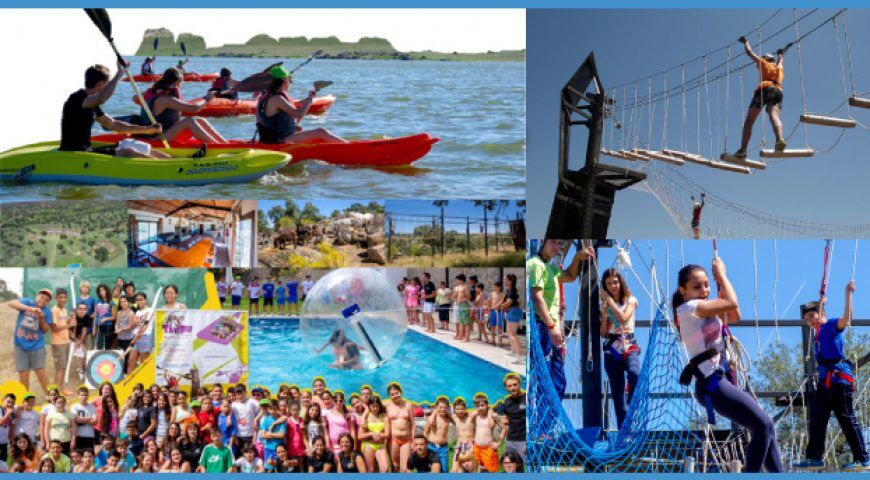
For many families, the question is not whether to send their child to a camp, but which one. Among all the formats available, multi-adventure remains the favourite year after year. These are the reasons why, edition after edition, it continues to be the most well-rounded option for a first summer away from home.
A variety of activities in a single stay
Multi-adventure does not confine participants to a single discipline. Over two weeks, a young person might have gone climbing, tried archery, gone on mountain hikes, swum in natural pools, slept out under the stars, and played team games. That rotation keeps motivation high and allows everyone to discover what they are good at.
Five reasons that explain it
1. Real togetherness
Sharing a room, dining hall and evenings with other young people builds friendships that last for years. Screens are left behind and conversation returns.
2. Progressive independence
Packing your own bag, remembering sun cream, helping clear the table: small daily wins that home life does not always allow for.
3. Direct contact with nature
Rivers, mountains, stars. The body tires healthily and sleep comes naturally. A clear contrast to an urban summer.
4. The human team
A ratio of 1 activity leader per 8 participants and a maximum group size of 40–50 people. That allows for genuine attention, not a conveyor belt.
5. Good food
4 meals a day from an in-house kitchen with menus adapted for allergies. Home-cooked food, not industrial catering.
What is learnt without noticing
Resilience: you do not always win the treasure hunt, the first climbing route does not always go to plan. Learning to lose is part of the game.
Teamwork: almost all activities are designed so that the group cooperates. Individuality gives way to “us”.
Time management: there are timetables and routines. Learning to respect them without anyone at home telling you to is a key skill.
Communication: with activity leaders, with fellow campers, with oneself. Distance from family teaches you to express yourself and to ask for help.
Who does NOT suit a multi-adventure camp?
The format is not magic. For young people with a strong fear of the outdoors, marked phobias or very specific needs, it is worth considering the option carefully. Even so, the team of activity leaders is trained to accompany first-time experiences, and the group usually does most of the work of settling in.
Frequently asked questions
How many days does a multi-adventure camp last?
The standard formats are a fortnight of 13–14 days and a ten-day stay. Shorter options exist for one-off getaways, but real togetherness is built over a fortnight.
What age is a good starting point?
There are multi-adventure camps adapted for children from age 6–7. What matters most is not age but the maturity to sleep away from home.
Is it safe?
The facilities, equipment and activity-leader ratio are all designed with safety in mind. The likelihood of an incident is low, and there is a protocol in place as well as a first-aid post on site.
Will my child get bored if they are not sporty?
Multi-adventure does not require a sporting background. There are activities for every profile and enjoyment does not depend on winning.
How do families stay in contact?
Mobile phones are collected on arrival and returned every 3–4 days so participants can call home. There is a daily social-media diary and an arrival SMS confirmation.
Convinced by multi-adventure?
Explore the locations, dates and prices of Natuaventura’s multi-adventure summer camps.
We organise trips for primary, secondary and high school
School Trips
across Spain
alicante madrid barcelona more destinationsCamps from 6 to 17 years old, in different regions of Spain: Alicante, Madrid, Ávila, Cantabria and Cuenca.
summer camps
2026
multiadventure surf english immersion