
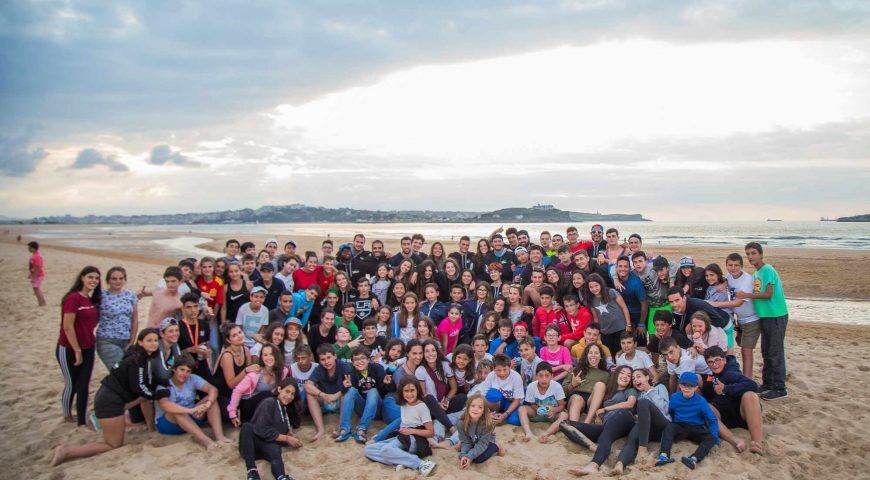
A summer camp is a 10 to 15-day residential stay at facilities set in nature, where children and young people aged 6 to 17 take part in educational leisure activities under the supervision of qualified group leaders present 24 hours a day. It differs from a day camp (no overnight stay), a summer school (school hours only, in the city) and a sports clinic (focused on a single sport).
What a summer camp is (and isn’t)
Strictly speaking, a summer camp is an educational leisure activity lasting at least one week, with overnight stays away from the family home, run in a natural setting and with a team of qualified group leaders responsible for the children at all times. The learning is not based on lessons or competitive sport but on the pedagogy of leisure: learning by living together, playing, taking on challenges and relating to peers in ways that everyday life rarely allows.
The word “camp” is used very loosely in the market and it is worth distinguishing the formats clearly:
- Day camp or summer school: no overnight stay; children return home every day. The autonomy and group-immersion experience is much more limited.
- One-day excursion or outing: if it lasts only 1 or 2 days, it cannot really be called a camp. There is barely any time to settle into the environment.
- Sports clinic: focused on developing a single sport — football, basketball, tennis — and may or may not include overnight stays. The aim is to improve sporting ability rather than provide broad educational leisure.
- Summer camp proper: a minimum of one week, overnight stays included, nature as the main setting, varied activities and 24-hour group leaders.
What makes a summer camp special
🌿 Natural setting
Nature is not just the backdrop: it is the classroom. Children switch off from screens, from city pace and from the routines of the school year. Daily contact with the natural environment improves concentration, reduces stress and sparks curiosity.
👥 24-hour group leaders
The team of qualified group leaders is present at all times, not just during activities. At night, in the dining hall, during free time. That continuous presence is what enables real attention to each child and an immediate response to any need.
🎯 Varied activities
The programme runs morning, afternoon and evening: mountain hikes, multi-adventure activities, themed evening events, creative workshops, team games and much more. The variety ensures every camper finds something they love.
🚀 Personal growth
Independence, new friendships, personal achievement, learning to live with others… The skills developed at a summer camp go far beyond the summer itself. They are tools for life that are hard to develop in any other context.
Summer camps at Natuaventura
With over 20 years of experience organising summer camps in Spain, Natuaventura currently runs 10 active camps across a range of natural settings. We offer both Spanish-language summer camps and intensive English-language summer camps, so families can choose the format that best suits their child.
🏕️ Spanish-language summer camps
- Gredos Multi-Adventure
- Navarredonda (Gredos)
- Cuenca Multi-Adventure
- Villar de Olalla (Cuenca)
- Santander Surf — 10 days
- Santander Surf — Fortnight
- Madrid Multi-Adventure
- Daroca (Alicante)
🇬🇧 English-language summer camps
- Sierra de Madrid English Camp
- Navatormes English Camp
Age groups and duration
All our summer camps organise children into age bands so that each child shares the experience with peers and the activities are matched to their stage of development. The most common durations are 10 days or 15 days (a fortnight), depending on the camp and the chosen turn.
| Group | Age | Usual duration |
|---|---|---|
| Younger children | 6 – 9 years | 10 days |
| Tweens | 10 – 13 years | 10 or 15 days depending on the camp |
| Teens | 14 – 17 years | 15 days (fortnight) |
Types of accommodation
🏡 Hostel-style lodge
- Shared rooms organised by age group
- Bathrooms and showers on-site
- Dining hall with adapted menus and special diets
- Green areas and shared spaces for free time
- First-aid kit and infirmary on the premises
⛺ Tents / cabins
- A closer connection with nature and adventure
- Private facilities with bathing and washing areas
- Covered dining area included
- A more immersive experience for older age groups
How to prepare for the summer camp
Check the type of camp: make sure the format (duration, accommodation, activities, language) is right for your child’s age, interests and level of independence.
Pack using the official kit list: every camp sends out a recommended packing list. Following it avoids missing or unnecessary items — comfortable clothes, hiking footwear, sun cream, a personal first-aid kit.
Talk to your child about what to expect: explaining in a positive way what they will be doing, who they will be with and what daily life will look like reduces first-day nerves and builds anticipation.
Inform the organisers of allergies and special needs: share any food allergies, intolerances, medication or specific needs with plenty of notice, never on the day of departure.
Confirm emergency contact details: verify with the organiser the on-call phone number, the protocol for communicating with families and the usual information channels during the camp.
Frequently asked questions about summer camps
From what age can children attend a summer camp?
From 6 years old. Our camps organise children into age bands: 6–9, 10–13 and 14–17 years. The youngest children take part in camps with smaller groups and assigned reference group leaders, so settling in is gradual and the support is closer.
How long does a summer camp last?
The most common options are 10 days or 15 days (a fortnight). Some camps also offer a one-week option. The minimum needed for the experience to feel complete — for the child to settle in, integrate with the group and enjoy themselves — is between 7 and 10 days.
What is the difference between a summer camp and a summer school?
A summer camp includes overnight stays and takes place outside the city, in a natural setting. A summer school does not include overnight stays and runs on a similar schedule to school: children attend in the morning and return home in the afternoon. The experience of independence, group living and digital detox that a summer camp offers is very different.
How do I know if my child is ready for a summer camp?
There is no single right age or level of maturity. The vast majority of children adapt within the first 1–2 days. Group leaders are trained to support that process and stay in touch with families throughout the stay. The best sign that a child is ready is that they show curiosity and enthusiasm, even if they also feel a bit nervous: that is completely normal.
Can I contact my child during the camp?
Yes, although in a limited way and following each camp’s protocol. The most common arrangement is one phone call a day or every two days. The aim is to encourage independence and group experience without children feeling cut off from their families. The organisation also informs parents proactively of anything that may come up.
Looking for a summer camp this year?
Browse our 2026 summer camps with available places and find the one that best suits your child.
We organise trips for primary, secondary and high school
School Trips
across Spain
alicante madrid barcelona more destinationsCamps from 6 to 17 years old, in different regions of Spain: Alicante, Madrid, Ávila, Cantabria and Cuenca.
summer camps
2026
multiadventure surf english immersion