
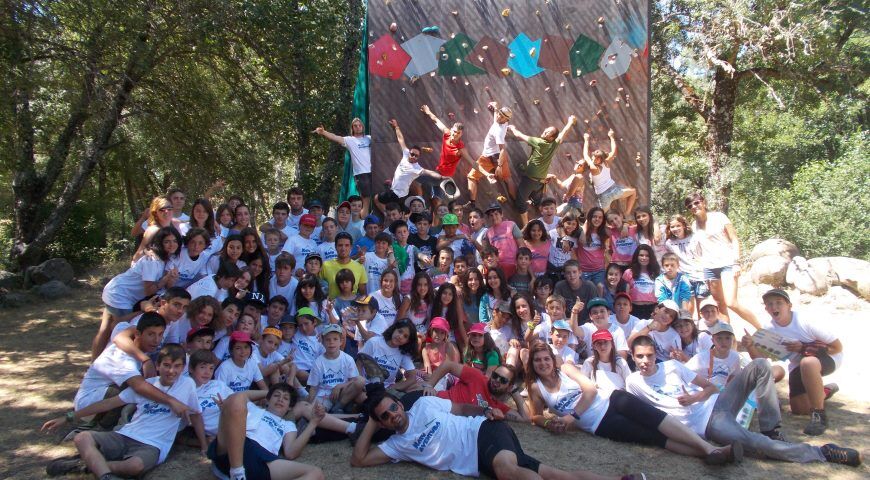
Going to summer camp is one of those decisions that looks small on the calendar but turns out to be enormous in a child’s life. A fortnight away from home, in a safe environment with peers their own age, leaves marks that the school routine can rarely replicate: real independence, friends for many summers to come and the first clear feeling of «I can do this on my own».
Why so many families choose a summer camp
Behind every booking there is a similar train of thought: giving children a summer that is different from the sofa, screens and the routine of structured activities. A camp offers something that neither intensive courses nor family holidays can offer in the same way: time with peers, nature on the doorstep and a team of qualified activity leaders to support the experience.
Five benefits no other plan can match
Real independence
Packing a rucksack, organising the day, resolving minor conflicts without mum or dad around. Independence is trained by living it, and a fortnight’s camp concentrates more opportunities to practise it than an entire term at home.
Nature and the outdoors
Rivers, forests, mountains, beaches. Away from air conditioning and screens, the body moves, skin gets some colour and sleep becomes deep again. It is probably the best digital detox possible for a teenager.
Friends for many summers
The friendships that form at camp have ingredients the school routine simply does not: 24/7 communal life, shared games, late-night activities, common memories. That is why many camp friends remain friends for decades.
Sport and physical activity
Climbing, archery, surfing, mountain hikes, team games. No competitive pressure, no grades: just the pleasure of moving, trying new disciplines and discovering that the body can do more than you thought.
Screen detox
Mobile phones are collected on arrival and returned every 3–4 days for calls home. The rest of the time, eyes are looking at people, landscapes and real games. When camp ends, many parents notice that on the first day home the phone is no longer the first thing they reach for.
Self-confidence
Climbing a bouldering wall, presenting an evening show, sleeping away from home for the first time. Each small challenge overcome adds another layer of security that the child carries home with them. It is the most lasting gift a summer camp gives.
What a typical day looks like
Morning and midday
- A relaxed wake-up and wash at the hostel.
- Breakfast with fresh produce (4 meals a day: breakfast, lunch, afternoon snack, dinner).
- Technical activity: climbing, archery, hike or swimming pools.
- Home-cooked lunch and supervised free time.
Afternoon and evening
- Large team game: inflatable games, treasure hunt, capture the flag.
- Afternoon snack and time for workshops or showers.
- Group dinner and evening programme prepared by the activity leaders.
- Back to rooms, quiet chat and off to sleep.
How we support families
We know that behind every booking are parents with many questions. These are the measures we apply at all our camps to ensure the experience is safe and communication is smooth:
- 1 activity leader per 8 participants, with groups of a maximum of 40–50 children divided by age.
- Four meals a day with in-house cooking and menus adapted to allergies.
- Mobile phones collected on arrival and returned for calls home every 3–4 days.
- Photo diary on social media and an SMS confirmation of safe arrival.
- We recommend 20–30 euros of pocket money for excursions and occasional treats.
Questions parents ask before the first camp
From what age can a child go to camp?
At Natuaventura we have camps from age 6 (Madrid Multi-Adventure and Sierra Madrid English Camp) up to age 17. Groups are always divided by age, so a 7-year-old will be with peers their own age and teenagers with theirs.
What if they have never slept away from home?
This is the case for many first-timers and it is not a problem. Rooms are formed with peers of similar ages, activity leaders sleep in the same facility and the first day is planned so that they arrive at bedtime tired from playing. Healthy tiredness does most of the work.
Is it normal to miss family?
Yes, especially in the first few days and at bedtime. Activity leaders are trained to support that moment. There are calls home every 3–4 days and we publish a daily diary on social media so families can see how the group is getting on. The initial homesickness almost always disappears when the first morning activity starts.
What does a child learn at camp that they cannot learn at home?
Living alongside peers without constant adult mediation, managing their own rucksack and schedule, resolving minor conflicts, sport without competitive pressure and genuine independence. These are learnings that the school and family routine can rarely replicate in such a short period.
How many days does a camp last?
It depends on the format. Fortnights last 13–14 days and are the most popular option; we also have 10-day formats (for example Santander Surf 10 Days) and a 13-day camp in Navarredonda. The duration allows the group dynamic to settle: the first few days are for settling in, and from the fourth or fifth day the children really own the experience.
Ready to choose the first camp?
We have formats for all ages, languages and settings: Madrid, Cantabria, Ávila, Cuenca and Alicante. Take a look at the options for this summer.
We organise trips for primary, secondary and high school
School Trips
across Spain
alicante madrid barcelona more destinationsCamps from 6 to 17 years old, in different regions of Spain: Alicante, Madrid, Ávila, Cantabria and Cuenca.
summer camps
2026
multiadventure surf english immersion