
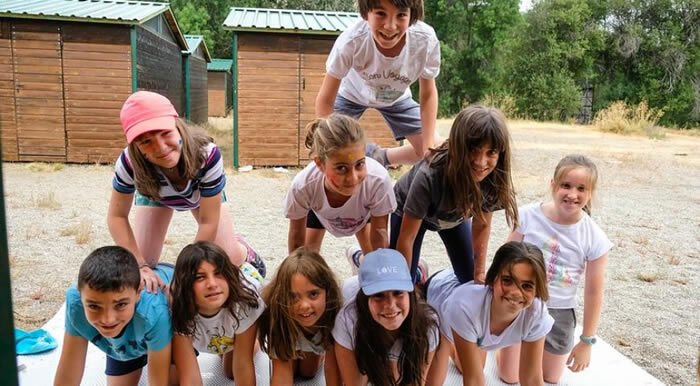
«From what age can I sign my child up for a summer camp?» is probably the most common question among families considering their child’s first summer away from home. The answer is not straightforward: it depends on the camp, the type of accommodation and the level of independence expected of the participant. At Natuaventura, the minimum ages range from 6 to 13 years. Here is the breakdown by destination to make the decision easier.
The minimum age is not just a number
When a camp sets a minimum age, it does so with three things in mind: the independence expected (getting dressed, showering, organising their bag), the type of accommodation (cabin, tent, tipi, hostel) and the physical demands of the activities. That is why camps in hostels with dedicated facilities tend to accept children from the age of 6, whilst tent-based camps or surf ten-day sessions require slightly older participants.
Minimum age by destination at Natuaventura
From 6 years old
Madrid Multi-adventure, Sierra Madrid English Camp and Cuenca Multi-adventure. Hostel accommodation, bunk-bed cabins, covered dining room, activity leaders based at the facility. Designed for the youngest campers.
From 7 years old
Gredos Multi-adventure, Navarredonda, Navatormes English Camp, Finca Daroca and Santander Surf Fortnight. Includes camps in tents (Gredos, Navarredonda) and tipis (Navatormes).
From 13 years old
Santander Surf 10 Days. Ten-day sessions with a 4-day surf course, designed for teenagers aged 13 to 17 with a more active and independent profile.
Up to 16 / 17 years old
Most camps go up to age 17 (Gredos up to 16). Groups are always divided by age, so a 7-year-old does not share activities with a 16-year-old.
What to expect from the first camp
Regardless of the destination, there is a common framework across all Natuaventura camps that gives parents peace of mind: a ratio of 1 activity leader per 8 participants, 4 meals a day with in-house catering and home-cooked food, single-gender rooms, separate bathrooms with individual showers, phone calls home every 3–4 days, a daily social media diary so families can follow the day-to-day, and a recommended pocket money of €20–30. Mobile phones are permitted but collected on arrival and returned for calls home.
How to know whether your child is ready
Basic independence: do they shower, dress and eat on their own? That is the foundation. Perfection is not required, but a degree of self-sufficiency is.
Has slept away from home: even if only at their grandparents’ or a cousin’s. The first night away will never be a first again.
Shows enthusiasm: if they ask to go, that is usually a sign they are ready. If it is the parents’ idea and the child is reluctant, it is better to start with a ten-day session or a first nearby fortnight.
Comfortable in a group: camp is community living. Children who enjoy group after-school activities, team sports or holiday clubs tend to settle in more quickly.
Frequently asked questions
My child turns 6 in July — can they go?
The usual requirement is that the age is reached by the start of the session. In any case, we recommend checking with the organisation before booking to confirm the specific situation.
Is there a difference between a 6-year-old and a 12-year-old living together?
Yes, which is why groups are divided by age. Each group has its own adapted activities and timetable, so a young child does not share a demanding trail with a teenager — they share the camp, not the daily routine of each age group.
What if they have never slept away from home?
The first few days are the crucial ones. The camp routine (play, healthy tiredness, activity leaders present) does most of the work. Phone calls every 3–4 days and the social media diary help families stay in touch without intruding on the experience.
What if they need medication or have an allergy?
Menus are adapted for allergies and activity leaders manage any medications handed over by the family at the start. It is important to flag this at enrolment so the team can plan ahead.
Is it better to start with a ten-day session or a fortnight?
For a first time, a ten-day session (Santander Surf 10 Days or the 3rd Ten-day session of Sierra Madrid English Camp) can be a gentler transition. For younger children, the fortnightly hostel-based camps (Madrid, Sierra Madrid English, Cuenca) offer the most supported environment.
Browse camps by age
Check the full catalogue and compare sessions, prices and ages to find the best fit for your child.
We organise trips for primary, secondary and high school
School Trips
across Spain
alicante madrid barcelona more destinationsCamps from 6 to 17 years old, in different regions of Spain: Alicante, Madrid, Ávila, Cantabria and Cuenca.
summer camps
2026
multiadventure surf english immersion