

The Sierra de Gredos is one of the great green lungs of central Spain: a massif of the Sistema Central shared between Ávila, Salamanca, Cáceres, Madrid and Toledo, with its heart protected as a Regional Park in the south of Ávila. This guide covers the natural environment, the finest natural pools, the most emblematic routes, multi-adventure activities, villages worth visiting and practical tips for planning your trip.
Natural Environment of the Sierra de Gredos
The Sierra de Gredos, situated in the heart of Spain, is a privileged destination for nature lovers, hikers and rural getaways. This mountain massif, part of the Sistema Central, is a paradise of biodiversity, stunning landscapes and tranquillity.
From its imposing peaks to its refreshing natural pools, Gredos offers a wide range of activities for every taste. We share it all through our Sierra de Gredos guide to make your visit an unforgettable experience.
Contents
- The natural environment of the Sierra de Gredos
- Natural pools of the Sierra de Gredos
- Routes in the Sierra de Gredos
- Multi-adventure activities
- Notable towns and villages
- Practical tips for your visit
- Our summer camps

The Natural Environment of the Sierra de Gredos
The Sierra de Gredos belongs to the Sistema Central, the mountain range crossing the Castilian Plateau, spanning the provinces of Salamanca, Ávila, Cáceres, Madrid and Toledo. Other notable ranges in this system include the Sierra de Guadarrama, Sierra de la Estrella and Sierra de Ayllón.
SIERRA DE GREDOS REGIONAL PARK
Part of this sierra is designated as the Sierra de Gredos Regional Park. It is located in the south of the province of Ávila and enjoys the protection granted to a nationally protected natural area.
The park is notable for its rich flora, with vegetation typically grouped into rebollo oak groves, pine forests and holm oak woods. These are nourished by rivers such as the Tormes, which are abundant in the sierra and create a wealth of bathing spots such as natural pools and river ponds.
The protected zone of the park covers several municipalities, including Navarredonda de Gredos, Piedralaves, Hoyos del Espino, Hoyos del Collado, El Arenal and Navacepeda de Tormes.
The Plataforma de Gredos is the main access point to the heart of the Regional Park and the Circo de Gredos. It is a car park situated at an altitude of 1,750 m where the old AV-931 road ends — today known as the Carretera de la Plataforma de Gredos, 12 km long. Access is regulated and costs €3.
The platform is located in the municipality of San Juan de Gredos, though access is mainly gained from the start of the road in the village of Hoyos del Espino.
CIRCO DE GREDOS
The famous Circo de Gredos is a glacial cirque where Pico Almanzor is found — one of the highest peaks in the entire Iberian Peninsula and the highest point of the Sistema Central. Several remarkable glacial lakes are also found here, including the Cinco Lagunas and the Laguna Grande de Gredos. The latter sits beside the staffed Refugio Elola mountain shelter, widely used by mountaineers attempting to climb Almanzor.
The Circo de Gredos lies within the catchment of the Río Tormes, a tributary of the Duero. All of this makes it one of the most important landscapes in the Regional Park.

Natural Pools of the Sierra de Gredos
The natural pools and ponds of the Sierra de Gredos are oases of freshness in the heart of wild nature. Formed by pure mountain water flowing down rivers and streams, they create unique spaces for rest and enjoyment.
Here are our picks for the most remarkable ones:
POZO DE LAS PAREDES
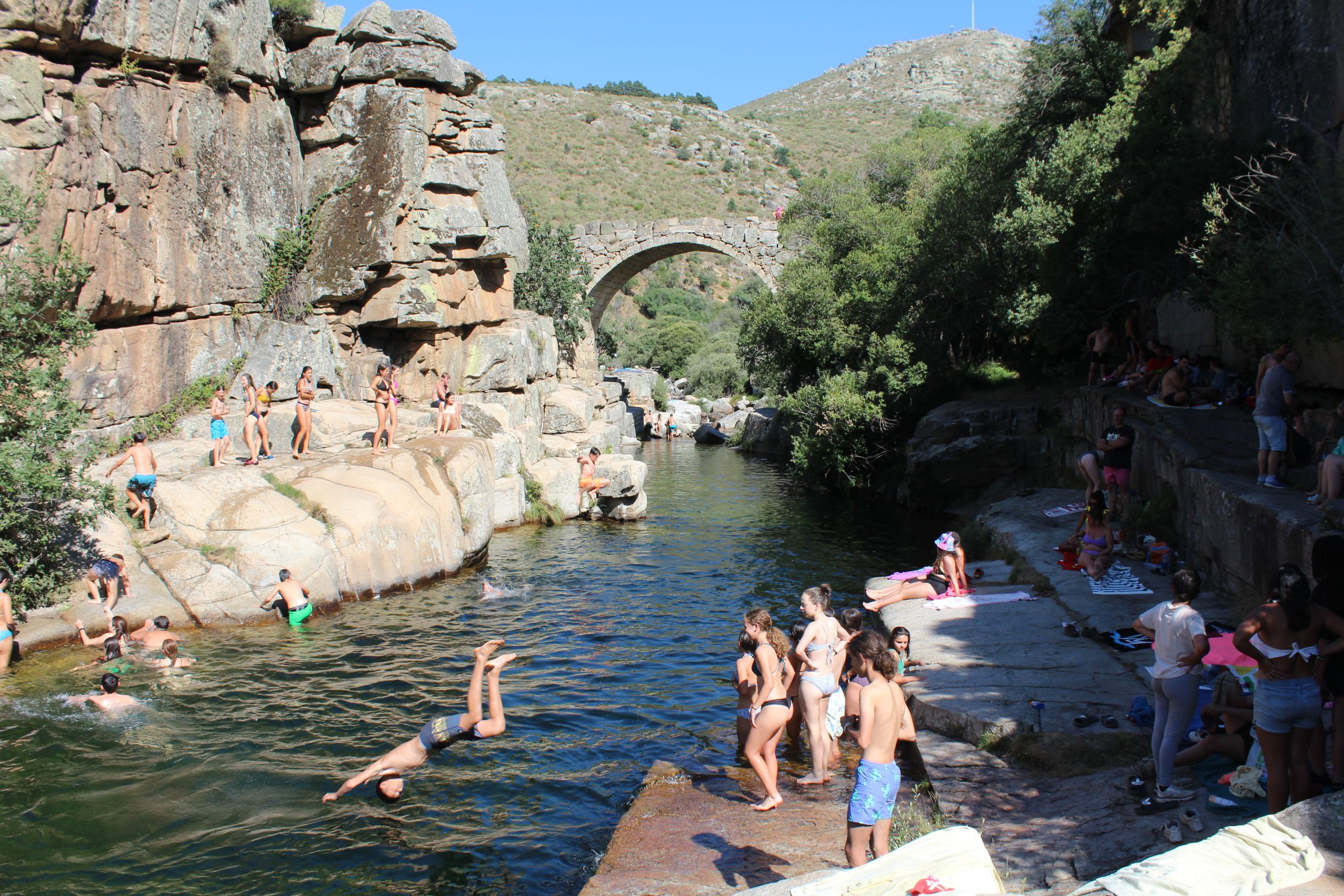
The Pozo de las Paredes, located in Navacepeda de Tormes in the Sierra de Gredos, Ávila, is a spectacular natural pool formed by the Río Barbellido, surrounded by imposing walls eroded by wind and water.
Known for its icy water, it attracts the bravest swimmers who want to bathe in its fresh waters flowing straight down from the Gredos mountains. A remarkable medieval bridge offers stunning views of Navacepeda de Tormes and the mountains, completing the experience with picnic areas suitable for all ages and groups.
It is undoubtedly one of our favourite destinations in our camps in the Sierra de Gredos.
CHARCA VERDE
On the Río Pelayos, in Guisando, at the foot of the southern face of the Sierra de Gredos, the water is held in a small natural pond. Local people make use of it in summer months to sunbathe and cool off while enjoying the beautiful Gredos landscape. We also recommend the Piscina Natural del Risquillo, also in Guisando.

GARGANTA DE LOS INFIERNOS
The Garganta de los Infiernos Nature Reserve is located in the Valle del Jerte, between the Sierra de Tormantos, the southern Sierra de Gredos and the Río Jerte. It is known for its waterfalls and the giant potholes of Los Pilones.
Two main attractions stand out: Los Pilones, famous for their unique rock formations, and El Chorrero de la Virgen, a waterfall visible from its viewpoint, though it may dry up in summer.
Although it now falls within Cáceres rather than Ávila, it remains part of the remarkable Sierra de Gredos and is only 30 minutes from Barco de Ávila.

CHARCA DE LA NIETA – PIEDRALAVES
The Charca de la Nieta is located in the beautiful village of Piedralaves, Ávila. It is a natural pool formed by a retaining wall on the Garganta Nuño Cojo, ideal for swimming in summer.
It offers two pools: a large, deep one for swimming and games, and a smaller, shallower one safe for children, connected by a small waterfall. It is a popular destination during the hot months, appreciated for its tranquillity and natural beauty.

CHARCA NATURAL DE LOS MOZOS
This small natural pond (not to be confused with the one in Monsagro, Salamanca) is ideal for cooling off in summer. It is found in the municipality of Tormellas, in the province of Ávila.
You can enjoy a pleasant swim in its crystal-clear waters belonging to the Garganta de los Caballeros, where small trout can be spotted. The pond is immersed in nature and you need to walk through a path lined with leafy trees to reach it.

PISCINA NATURAL DE LOS RIVEROS, CANDELEDA
In Candeleda, we find the natural pool El Raso de Abajo. Located next to the Los Riveros recreational area in the heart of the Sierra de Gredos, it offers a beautiful, secluded setting for a hot summer’s day.
It is complemented by a lovely walk along the Río Alberche, near which there is also a bathing area on the river itself, about 300 metres from the natural pool.

RÍO ARBILLAS
Ávila is a summer destination known for its streams and natural pools, ideal for picnics. In Poyales del Hoyo, the landscapes of the Río Arbillas stand out for their pines and waters, forming part of the Gredos Regional Park.
Although the water tends to be cold, there are pools near the road with slightly warmer water. Natural swimming spots in the area include the Poza del Caracol, the Charco del Risquillo and the Charco de los Médicos.

GARGANTA DE VALDEASCAS
The Garganta de Valdeascas is an ideal spot for a walk in nature and, weather permitting, a refreshing swim.
It is a beautiful natural setting in Navarredonda, in the Sierra de Gredos. It tends to go unnoticed due to its proximity to the Plataforma de Gredos, the starting point for numerous mountain routes.
It remains one of the best-known and most enjoyed routes — arrive and reward yourself with a swim in a breathtaking setting. It is a well-established route in our Gredos camps.

NATURAL POOLS OF ARENAS DE SAN PEDRO
The natural pools of Arenas de San Pedro in Ávila are undoubtedly a more tourist-friendly and family-oriented destination. They offer a safe, well-equipped bathing area for all ages, with a shallower section for children and a deeper one for adults, both regulated by weirs.
The main pool has amenities such as ladders, showers and a diving board, sharing the space with river trout visible through the clear water. For those who prefer peace and quiet, the nearby Charco de la Chiva and Charco Pelayos offer wilder settings with small waterfalls, plus a restaurant and picnic area at Pelayos.

RÍO TORMES AND ITS TRIBUTARIES
To conclude, there are thousands of natural pools and bathing spots in Gredos. Our advice is to follow the rivers and their tributaries.
The one we would highlight most is the Río Tormes, which offers incredible bathing spots throughout the area, such as the Charco del Molino or the Río Barbellido.
It is as simple as noticing which rivers run alongside the campsites where you are staying or the roads you are travelling. We guarantee they will be magnificent bathing spots.

Routes in the Sierra de Gredos
The Sierra de Gredos offers a wide variety of hiking routes allowing visitors to explore its rich biodiversity, magnificent landscapes and the natural beauty of the region.
From easy paths for families to more challenging routes for experienced hikers — it is important to know your own fitness level, especially with safety in mind.
LAGUNA GRANDE DE GREDOS – CIRCO DE GREDOS ROUTE
The route to Laguna Grande lies at the glacial heart of the Sierra de Gredos. It is an emblematic trail offering a unique landscape of tranquillity beside a glacial lake, surrounded by imposing rocky mountains — none other than the approach to Pico Almanzor, the highest point in the sierra.
Starting from the Plataforma de Gredos, which has ample parking and facilities, this 7-km total route is divided into an ascent and a descent. It is marked by a cobbled path and signposts guiding visitors through points of interest such as Llano Barbellido, the Fuente de los Cavadores and the Mirador de los Barrerones. After a descent past the Fuente de los Barrerones, you reach the Laguna Grande, culminating the walk at the Refugio Elola.
Key points to note:
- Swimming is prohibited in the glacial lakes as they are nature reserves.
- For the Refugio Elola, advance booking is required at least a week ahead by phone.
- There are many alternative routes on the various peaks of the Circo de Gredos — choose the one that best suits your abilities.
- Bivouacking (sleeping outdoors with only a sleeping mat and sleeping bag) is permitted in the surrounding area, but camping with a tent is illegal in most areas of Spain (except in private sites such as campsites and at certain altitudes on the mountain — always check in advance).
- Be responsible and assess your physical condition and limitations. Although it is not among the most difficult routes, it is a mountain path where rescue is complicated and would only be possible by helicopter.

SENDA DE LAS CINCO LAGUNAS
The classic route to the Cinco Lagunas de Gredos from Navalperal de Tormes offers a spectacular journey through glacial landscapes. It stands out for its natural beauty and technical accessibility outside the snow season, though it becomes more demanding in winter.
The route can be completed in a day but is best enjoyed over two as a circular trail. It crosses the Garganta del Pinar, revealing stunning views and a total elevation gain of 1,000 metres over nearly 25 kilometres. Its technical simplicity combined with physical demands makes it an unforgettable experience and one of the most emblematic for hikers in the Sierra de Gredos.

SENDA DE LOS PESCADORES, ARENAS DE SAN PEDRO
The Senda de los Pescadores, located in Arenas de San Pedro, is a circular route noted for its impressive landscapes, refreshing natural ponds and rich vegetation — ideal to enjoy in summer. Walking alongside the Río Pelayo and surrounded by varied flora, the path offers manageable sections and more challenging stretches, especially for those with children.
Starting at the Río Pelayo recreational area, visitors can admire the Sierra de Gredos and discover charming spots such as the Charco Calderillo and the Pozo Quirol, the latter with a picturesque walkway crossing the gorge — making this trail a memorable nature experience.

SENDA DE PESCADORES, CANDELEDA
This Fishermen’s Path is a historic route used by fishermen to catch trout along the Garganta de Santa María, ascending to the ancient Puerto Bridge of Roman origin. The return is made via the Trocha Real, passing through natural landscapes alongside the Garganta Santa María, including a crossing via a Tibetan bridge and a section with fixed ropes to overcome the Garganta Blanca.
The path culminates at the Roman bridge over the Garganta Lóbrega, then continues along a trail passing the Fuente del Sauce, an old watering trough, descending some 300 metres towards the village of Candeleda.

RUTA CHORRO DE LA VENTERA
The route from Madrigal de la Vera, in Cáceres, starting on the right bank of La Garganta de Minchones, is a must-do experience leading through the Finca del Burreño towards the historic ruined Puente de la Umbriela. Along the way, the imposing waterfall of El Chorro de la Ventera can be admired from the Tarraces hills.
The route continues following the stream to reach highlights such as the Charco Verde, the Corte del Cancho in Talaveruela and the Portilla de los Escarbaeros, passing through unique natural landscapes of remarkable beauty.

RUTA GARGANTA VALDEASCAS
Reaching the Garganta de Valdeascas in Navarredonda de Gredos is easy: follow the road from the petrol station near Navarredonda to the Camping Navagredos, then turn left. This route, noted for its waterfalls and natural pools, is perfect to visit year-round (especially in summer) and is particularly well suited to families with children and large groups.
The walk, though continuous and slightly rocky, is not excessively difficult. It offers a stunning natural setting with ‘granite beaches‘ that invite rest and swimming in their refreshing waters, making it a memorable and accessible outing for everyone.
It is undoubtedly one of our favourite routes to take with children in our summer camps in the Sierra de Gredos.

RUTA LAS CHORRERAS
We head to Hoyos del Espino and the Sierra de Gredos for a circular route of 10.5 kilometres with minimal elevation change to the waterfalls known as Las Chorreras del Tormes, departing from Navarredonda via the Camino Navatormes.
Leaving behind landmarks such as the bullring and the Navagredos campsite, we follow the Río Tormes to the right, passing through the Navatormes and Las Maliciosas camps, until we reach the spectacular Las Chorreras area, where numerous crystal-clear waterfalls can be admired. The route continues parallel to the Arroyo de Mesegoso, concluding in Barajas, in the southern part of Navarredonda de Gredos, Ávila.

SENDA DEL PINAR DE NAVARREDONDA
The trail through the Pinar de Navarredonda de Gredos, surrounded by centuries-old wild pines, forms a unique ecosystem with rich biodiversity, particularly for birds such as the great spotted woodpecker and the long-eared owl.
This easy, almost flat path is dotted with information panels and stone benches for resting and enjoying nature. Starting from the Camino Prado Viejo, near the sports area and the municipal pool, visitors can cool down at the Fuente de la Ladera before exploring the area around the Parador Nacional de Gredos, the Fuente del Rey and Peña Histórica, a post-Civil War historic site that today invites leisurely strolls.

ROUTE TO LOS HERMANITOS DE TEJEA
This hiking route begins near Candeleda, bordering Castile and León and Extremadura, offering a particularly beautiful journey in spring thanks to the blossom.
It crosses the Garganta de Tejea and passes through the Prado de la Carrera, the oldest Vetton castro in the area, towards the summits of Los Hermanitos de Tejea and the Majada de los Blázquez, now a mountain shelter. Although the route has several springs, carrying water is advisable, especially in summer.

PUENTE DEL DUQUE AND NACIMIENTO DEL RÍO TORMES ROUTE
The route between the Puente del Duque and the source of the Río Tormes at Prado Tormejón offers a journey of more than six kilometres through beautiful landscapes in the Gredos Regional Park.
This path, accessible to everyone and not overly crowded, is noted for its tranquillity, broken only by the sounds of nature — cowbells and running water. Near Hoyos del Espino, the route begins close to the Mesegosillo estate and leads visitors through pure nature, including the Charco del Cardenillo, a magical spot just a short distance from the start. This walk is also part of the Músicos en la Naturaleza festival experience, which attracts thousands of visitors annually.

Multi-adventure Activities
The Sierra de Gredos is famous not only for its hiking routes and natural pools, but also for the variety of multi-adventure activities it offers — ideal for thrill-seekers and those wanting unique experiences. It is an immersive way to enjoy nature and its surroundings to the full.
From rock climbing and canyoning to horse riding and paragliding, Gredos is the perfect setting for adventurers. All activities are supervised by experts to guarantee a safe and rewarding experience.
One of the companies that organises multi-adventure activities particularly well is GredosTormes, which offers all kinds of adventures including:
- Their Pinos Cimeros ropes park
- Orienteering routes
- Archery
- Gymkhanas
- Rock climbing
- Hiking
- Canyoning, and much more.
Independently of any company, our favourite multi-adventure activities in our camps in Gredos are:
Jardín de Cuerdas Pinos Cimeros
Move through the trees in complete safety at this ropes park in Hoyos del Espino (Ávila), next to the Casa del Parque. It has four adventure circuits carried out under professional supervision, guaranteeing a safe experience for all participants.

Horse Riding
The thrill of horse riding through the impressive Sierra de Gredos is a multi-adventure activity that promises unforgettable experiences in the heart of nature.
There is no better way to feel the freedom and peace as you travel ancient paths and enjoy spectacular landscapes on these noble animals. It is ideal for all adventure and animal lovers, offering a unique way to connect with the natural environment and escape the daily routine.
One of the companies we trust each year is Cabalgredos, in Hoyos del Espino, Ávila.

Archery
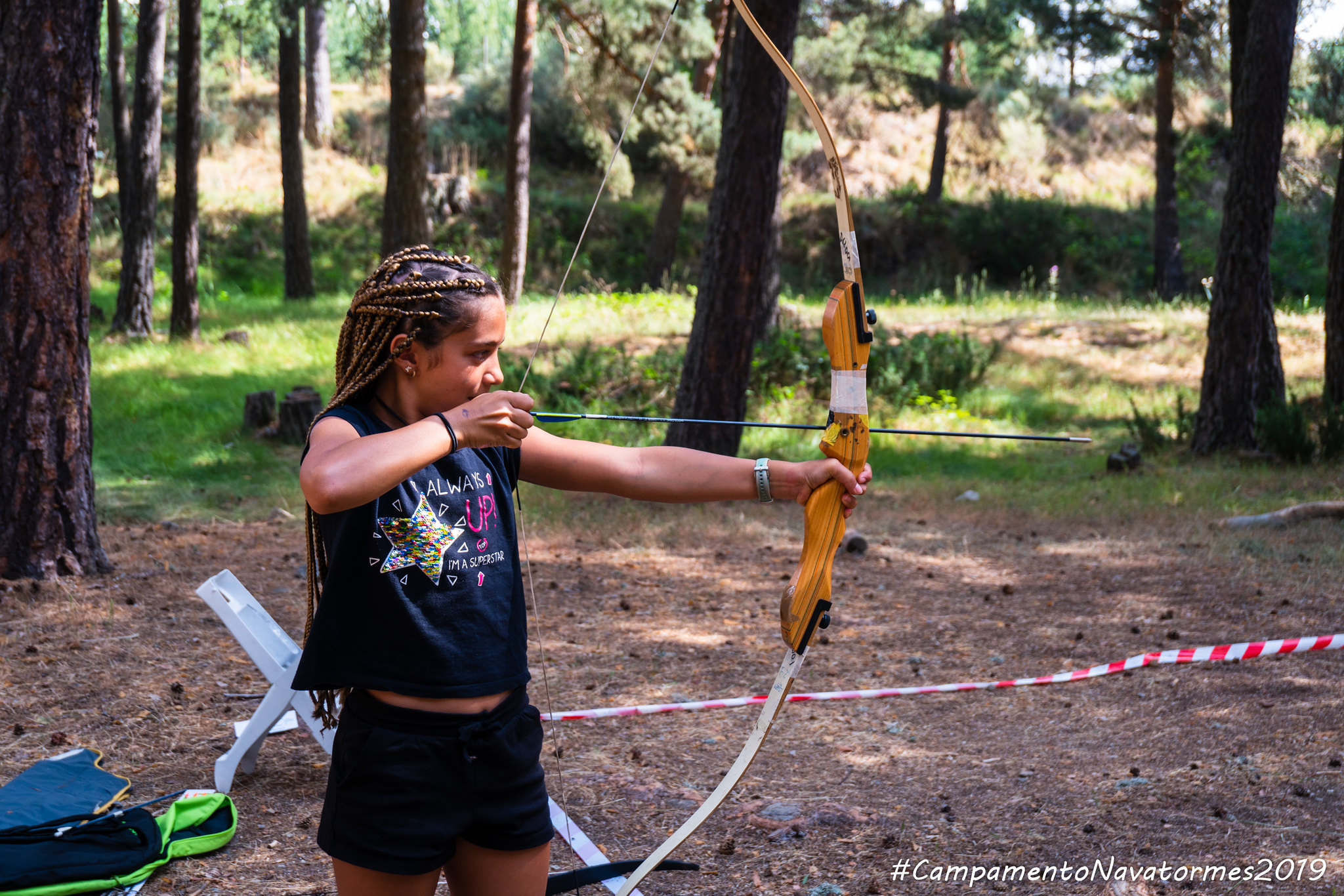
Archery combines skill, precision and fun in a spectacular natural setting. Perfect for adventurers of all ages, archery in Gredos offers a unique experience where you can challenge your aim while surrounded by mountain landscapes of unparalleled beauty.
This outdoor adventure makes you an archer for a day, enjoying the tranquillity and challenge that this ancient sport provides.
Water Activities: Kayaking, Paddleboarding, Rowing and more
From gliding over crystal-clear waters on a paddleboard to exploring winding rivers by canoe or feeling the adrenaline of canyoning, Gredos is the perfect destination for water and adventure enthusiasts. The Río Tormes and its gorges offer countless options for water activities.
Immerse yourself in unique experiences surrounded by spectacular scenery, and let the breathtaking nature of the Sierra de Gredos fuel your adventurous spirit. Get ready for unforgettable moments on the water — perfect for multi-adventure fans of all levels.

Notable Towns and Villages of the Sierra de Gredos
The Sierra de Gredos is known not only for its natural landscapes, but also for its picturesque towns and villages, steeped in history, culture and tradition.
Highlights:
Navarredonda de Gredos
Barajas and Navarredonda form a single municipality in the El Barco de Ávila–Piedrahita district, known for its extensive Scots pine forests and as a favourite destination for mushroom pickers. The area, marked by the history of transhumance evidenced in a granite bridge and remnants of ancient roads, offers trails such as Las Chorreras and Valdeascas — ideal for active tourism and enjoying its natural pools.
It also offers the opportunity to visit the source of the Río Tormes, making it an exceptional place for nature lovers and outdoor activity enthusiasts in the province of Ávila.

Hoyos del Espino
Hoyos del Espino, known for the natural depressions of its landscape and its history of transhumance. This municipality is the main access point to the central Gredos massif and is notable for its proximity to the Plataforma de Gredos, from which routes depart towards the Laguna Negra and the summits of the Circo de Gredos.
The Nature Interpretation Centre offers information for planning visits, while the medieval Puente del Duque and options for horse riding or cycling enrich the tourist offer. The area, famous for the Festival del Piorno en Flor, the Músicos en la Naturaleza Festival and its Starlight Reserve certification, is an ideal destination for nature lovers, hikers, stargazers, music fans and those interested in cultural traditions.

Piedralaves
Piedralaves is a charming village on the hillside of a mountain in Ávila. It is characterised by its picturesque winding streets and rich traditional architecture, using materials such as granite and oak wood.
The village offers a journey through its history and culture via its traditional stone houses, the Church of San Antonio with its Mudéjar artesonado ceiling, the emblematic Cruz de los Enamorados, and the Plaza Mayor at the heart of local life. Also notable are the Clock Tower, the Ermita de San Roque y la Concepción, the Parque El Venerito, the Garganta del Nuño Cojo and the Charca de la Nieta, all immersing visitors in the natural and cultural richness of Piedralaves.

Navacepeda de Tormes
Navacepeda de Tormes, situated in the upper Tormes valley in the Sierra de Gredos, offers a picturesque and peaceful retreat where visitors can immerse themselves in village life. Highlights include the Pozo de las Paredes, a canyon of granite formations crossed by a Roman bridge arch, and the Church of San Juan Bautista, famous for bearing what is said to be a brown bear’s claw mark along with an associated legend.
For adventurers wishing to climb Pico Almanzor, the highest point in Gredos, the Plataforma de Gredos is the starting point. Bear in mind it requires good physical fitness and prior experience for a route of approximately 7 hours.

Arenas de San Pedro
Arenas de San Pedro, situated in the south of Ávila within the Sierra de Gredos Regional Park on the border with Toledo, is an essential destination in the Sierra de Gredos and the Valle del Tiétar. The Arenas de San Pedro reservoir attracts numerous tourists each year thanks to its varied leisure offer; the municipality also has natural bathing areas such as the Pelayos pools.
Its historic centre houses architectural gems such as the Castillo del Condestable Dávalos, the Convent of San Pedro de Alcántara and the Palace of Infante Don Luis de Borbón — making it a place rich in cultural and natural heritage.

Cuevas del Valle
Cuevas del Valle is a picturesque and lesser-known village situated in the Valle del Tiétar and the Sierra de Gredos, distinguished by its singular architecture featuring caves used as basements and larders beneath the houses.
A stroll through its cobbled streets reveals the beauty of its homes, adorned with wooden balconies filled with flowers and decorated doors with hand-embroidered artisan curtains, reflecting the cultural richness of its inhabitants.

Candeleda
Candeleda is a prominent destination in the Sierra de Gredos, located in the Valle del Tiétar, in the south of Ávila, with important peaks such as Almanzor in the Circo de Gredos.
This attractive municipality is easy to explore on foot, with attractions including the Town Hall, the Church of Nuestra Señora de la Asunción, the castro del Raso and the Tin Toy Museum in the Casa de las Flores — making it a place of considerable cultural and historical interest.

Mombeltrán
This picturesque municipality in the province of Ávila is located in the Sierra de Gredos within the Valle del Tiétar. It is known as the most prominent settlement in the Barranco de las Cinco Villas natural area, at the foot of the Puerto del Pico pass. Highlights include the Castillo de Mombeltrán, notable for its historical significance.
Its town centre also houses the Church of San Juan Bautista, the Plaza de la Corredera, and ancestral homes identifiable by heraldic shields on their facades — a journey rich in history and culture.

Practical Tips for Your Visit
A visit to the Sierra de Gredos requires preparation to make the most of your experience. These practical tips will help you plan your trip, ensuring both safety and enjoyment.
Highlights:
What to Bring:
Appropriate equipment is essential — from proper footwear to sun protection and sufficient water for the routes. Always bring some warm layers; in Gredos, you will never regret it.
Best Time to Visit:
The Sierra de Gredos has countless options throughout the year to enjoy the charm of each season. However, we recommend summer for accessing more routes and swimming in the natural pools. That said, do not be caught out — although daytime temperatures are warm, evenings can get quite cool.
Conservation Rules:
Much of the charm of the Sierra de Gredos lies in its nature and conservation. It is important to visit with awareness, leaving places better than you found them: no littering, no polluting the water. Be aware of areas where swimming is and is not permitted, as some may be nature reserves under protection.
Where to Stay:
We always recommend fully immersing yourself in the experience, so the ideal option is to stay at campsites (we recommend Camping de Gredos and Camping Navagredos) or sleeping under the stars with a classic bivouac (sleeping mat and sleeping bag only). If you are bringing a tent, bear in mind that camping is illegal in most places in Spain (except on private land such as campsites and at certain altitudes on the mountain).
Mountain shelters and hostels are also a good option, especially in colder months. Remember that shelters were primarily created for mountaineers and hikers to rest, so their main purpose should always be respected. All options are quite affordable.
Research and Plan Your Trip:
Every time you visit a new place with so many options, find out which ones interest you most and suit your circumstances. This way you can set off from a clear starting point and create your own guide, as trying to do everything can be overwhelming.
Once your guide is ready, look into practical details — for example: whether there is a toll road (such as the Plataforma road); whether any natural pool has a paid car park; route websites such as Wikiloc; and whether there are refreshment stalls and picnic tables where you plan to go.

Our Summer Camps: Why Is the Sierra de Gredos the Best Setting for a Camp?
The Sierra de Gredos area is a very popular location for summer camps. This is due to several factors. On one hand, it is an area of outstanding natural value, enabling a camp experience in constant contact with nature. This in turn promotes both learning and the transmission of important values.
Care for the environment, values and awareness of our place in the world and the benefits of a healthy life: all of these are messages that a summer camp can convey by making the most of its location in a setting like the Sierra de Gredos. The sierra also occupies a central position in the Iberian Peninsula, making it accessible from various regions without being too far from any of them.
OUR SUMMER CAMPS IN THE SIERRA DE GREDOS:
AVENTURA PIEDRALAVES
A multi-adventure and mountain summer camp in the Valle del Tiétar, perfect for children to experience daring adventures and memories they will never forget in the unparalleled setting of the Sierra de Gredos.
GREDOS MULTI-ADVENTURE
Located in the heart of Gredos, this camp is a unique opportunity for children and teenagers to immerse themselves in a world of adventures, mountains and fun. From hiking to archery and horse riding, every day in Gredos is an adventure waiting to be lived.
NAVARREDONDA
A multi-adventure camp in nature in the heart of the Sierra de Gredos. With a programme that blends multi-adventure activities, the natural environment and the best communal experience possible: games, gymkhanas, evening activities, workshops, outdoor activities, mountain hikes and much more.
NAVATORMES ENGLISH CAMP
A multi-adventure language immersion summer camp in Ávila, in the heart of the Sierra de Gredos. We run our activity programme 100% in English, with qualified and native-speaking activity leaders. A full programme to enjoy from the first to the last minute, in a privileged natural setting — English becomes a game, here we go!
Learn More About Summer Camps
- Sierra de Gredos Guide: Routes, Natural Pools and More
- Multi-adventure and Mountain Summer Camp: Navatormes English Camp
- Multi-adventure Summer Camp: Gredos
- Surf Summer Camps
- Multi-adventure on the Beach: The Villar Camp
- How to Find the Perfect Summer Camp?
Other sources:
Summer camps on Wikipedia
Statistics Canada study on physical activity in young people
Our camps in El País
Frequently Asked Questions About the Sierra de Gredos
What is the difference between the Sierra de Gredos and the Sierra de Gredos Regional Park?
The Sierra de Gredos is the entire massif of the Sistema Central, spanning Salamanca, Ávila, Cáceres, Madrid and Toledo. The Sierra de Gredos Regional Park refers only to the southern part of Ávila, declared a nationally protected natural area, covering municipalities such as Navarredonda de Gredos, Hoyos del Espino, Hoyos del Collado, Navacepeda de Tormes, Piedralaves and El Arenal.
How do you access the Circo de Gredos and Pico Almanzor?
The main access to the heart of the Regional Park and the Circo de Gredos is the Plataforma de Gredos, a car park at 1,750 m altitude at the end of the old AV-931 road (now the Carretera de la Plataforma de Gredos, 12 km). Access is regulated and costs €3. From there, routes depart to the Laguna Grande and the Refugio Elola, the usual base for climbing Almanzor.
Can you swim in the glacial lakes of Gredos?
No. Swimming is prohibited in both the Laguna Grande and the Cinco Lagunas: they are nature reserves and swimming could damage the ecosystem. For swimming, there are plenty of natural pools on the Río Tormes, the Río Barbellido, the Río Pelayos, the Río Arbillas and gorges such as Valdeascas and Los Infiernos.
What is the best time to visit the Sierra de Gredos?
Every season has its charm, but summer is the most complete time: more routes are accessible and, above all, the natural pools and rivers are at their best. Even so, always bring warm layers — daytime temperatures may be high but evenings in the sierra can get quite cool.
What summer camps does Natuaventura organise in Gredos?
Natuaventura runs several camps in the heart of the Sierra de Gredos: Gredos Multi-adventure (in Hoyos del Collado, municipal facility), Navarredonda (Aula de la Naturaleza next to Camping Navagredos), Aventura Piedralaves (Valle del Tiétar) and Navatormes English Camp (100% language immersion in Navarredonda de Gredos). All combine routes, natural pools on the Tormes, a ropes garden, archery, horse riding and evening activities.
Experience Gredos at one of our summer camps
Use the Regional Park as an outdoor classroom: routes, swimming in the Tormes and Pozo de las Paredes, multi-adventure activities and unforgettable evenings. Limited places each session.
We organise trips for primary, secondary and high school
School Trips
across Spain
alicante madrid barcelona more destinationsCamps from 6 to 17 years old, in different regions of Spain: Alicante, Madrid, Ávila, Cantabria and Cuenca.
summer camps
2026
multiadventure surf english immersion